


Views: 0 Author: Site Editor Publish Time: 2026-05-27 Origin: Site


At first glance, a glass stovetop seems completely counterintuitive. Glass usually shatters under extreme stress, yet modern kitchens rely on it directly beneath roaring open flames and heavy cast-iron skillets. We often wonder how this delicate-looking material endures such brutal daily punishment without failing.
Choosing the wrong replacement panel or misunderstanding its thermal limits inevitably leads to catastrophic thermal shock. When an improper stovetop panel shatters, it creates severe safety hazards involving flying shards and uncontrolled gas fires. Precision and thorough material knowledge remain absolutely non-negotiable for anyone repairing or purchasing these appliances.
We will break down the exact materials used in Gas Cookers Glass and reveal the hidden engineering behind their impressive heat resistance. You will gain a highly practical framework for evaluating stovetop durability and safety. This guide ensures you make informed, confident decisions for any future replacements or new purchases.
Material Distinction: Gas cooker stovetops primarily rely on two distinct materials: heat-treated Tempered Glass (for surface panels) and Glass-Ceramic (for extreme heat and direct flame proximity).
The Thermal Shock Threat: Glass doesn't usually fail from the absolute temperature of the flame, but from rapid temperature changes (thermal gradients) across the surface.
Manufacturing Realities: High-quality gas cookers glass undergoes 600°C+ quenching and utilizes high-temperature silk-screen printing (sintered at 680–720°C) to prevent aesthetic degradation.
Replacement Protocol: Precision is non-negotiable. Factoring in the "1/8th-inch rule" for thermal expansion is critical when sizing replacement panels.
Cooktop glass is definitely not standard silica. Manufacturers engineer these materials intensively to prioritize extreme thermal resistance and massive mechanical strength. You cannot take standard window glass and expect it to survive a kitchen environment. Standard formulations lack the internal stress structures necessary to survive heat or impact. Instead, the industry relies on two highly advanced material categories.
Manufacturers produce tempered panels by heating premium float glass above 600°C in specialized industrial furnaces. After reaching this critical temperature, high-pressure air nozzles rapidly quench the surface. This extreme cooling creates a permanent compressive stress layer on the outside while the interior remains in tension. This tension is the secret to its durability.
Because of this process, the mechanical strength skyrockets. It easily withstands up to 24,000 PSI. This makes it four to five times stronger than standard untreated glass. It easily handles the weight of heavy stockpots and accidental impacts from kitchen utensils.
However, it does have specific heat limitations. It safely sustains continuous ambient temperatures around 470°F to 500°F. This makes it highly suitable for the main stovetop base panel receiving conductive heat. It is not suitable for direct fire contact or areas inside the actual flame zone.
For areas requiring direct flame exposure, manufacturers use a completely different process. They add special nucleating agents to the raw mixture. This creates a tight crystalline structure during the heating phase. Brand names like PyroCeram or Robax utilize this complex chemical method. It is technically a transparent ceramic rather than true glass.
Its heat capabilities are truly astonishing. It exhibits virtually zero thermal expansion. You can heat it and cool it rapidly without dimensional changes. It comfortably withstands continuous temperatures exceeding 1,000°F to 1,400°F without softening or cracking.
There are distinct trade-offs to consider. You gain massive thermal resilience and heat tolerance. However, you lose a degree of physical impact resistance compared to tempered variants. Manufacturing costs also rise significantly due to the complex crystallization processes.
Performance Chart: Tempered vs. Glass-Ceramic | ||
Feature | Tempered Glass | Glass-Ceramic |
|---|---|---|
Primary Use | Base surface panels | High-BTU direct flame zones |
Max Continuous Heat | ~500°F (260°C) | >1,400°F (760°C) |
Thermal Expansion | Moderate | Virtually Zero |
Impact Resistance | Extremely High (24,000 PSI) | Moderate |
Many consumers wrongly assume any thick pane can handle cooking temperatures. This fundamental misunderstanding leads to dangerous kitchen accidents. We must explore exactly why standard materials fail so dramatically when exposed to open combustion.
First, we need to debunk the borosilicate myth. People often assume lab-grade borosilicate glass works safely for direct gas flames. This assumption is dangerous. While borosilicate handles oven baking brilliantly, direct stovetop flames overwhelm its thermal capacity. Ovens provide gentle ambient heat. Gas burners provide aggressive, highly concentrated conductive heat. Borosilicate simply cannot disperse this localized energy fast enough.
Gas flames create severe hot spots across a surface. Localized combustion temperatures easily exceed 2000°C. Standard materials expand unevenly across these hot spots. The center expands rapidly while the edges remain cool. This uneven expansion pulls the molecular structure apart. It quickly leads to catastrophic stress fractures.
Sudden temperature drops present extreme risks. Imagine boiling water spilling over the side of a pot onto a hot panel. If the surface is tempered, the extreme thermal shock might cause it to violently shatter. Due to its safety design, it breaks into hundreds of dull cubes rather than jagged shards. Under identical thermal stress, glass-ceramic remains completely intact because its crystalline structure prevents any thermal expansion or contraction.
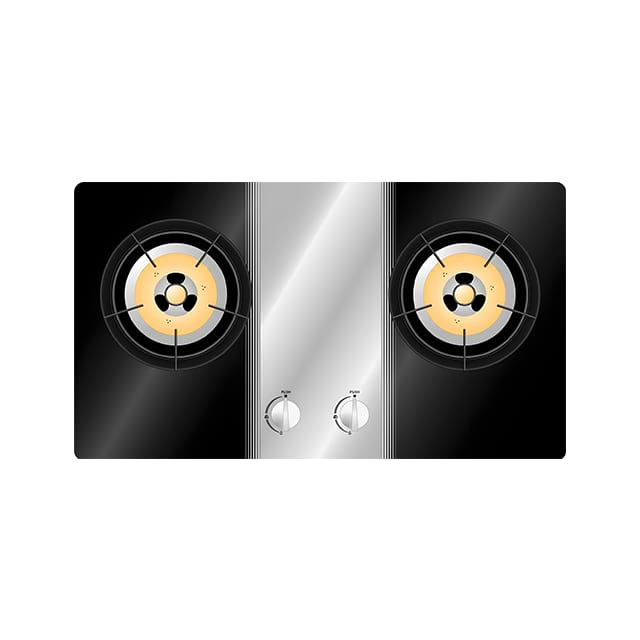
Brands do not simply cut a piece of glass and ship it to consumers. They follow rigorous manufacturing protocols to ensure every panel survives decades of heavy household use. This involves precise thickness calculations, specialized inks, and aggressive drop testing.
Industry standards dictate 6mm to 8mm thicknesses for surface applications. This specific range perfectly balances structural load and heat dissipation. A heavy cast-iron pan requires serious mechanical support. Panels thinner than 6mm snap under heavy weight. Panels thicker than 8mm trap dangerous amounts of heat beneath the burners. This thickness range provides the optimal middle ground.
You might wonder how burner indicators and brand logos survive such extreme heat. Manufacturers use advanced high-temperature ink silk-screen printing. They fuse this ink directly into the panel during the manufacturing process. The fusion occurs between 680°C and 720°C. Because the ink essentially becomes part of the glass matrix, the aesthetics will never peel, flake, or burn off under 300°C continuous stovetop heat. This guarantees your appliance looks pristine for years.
Premium Gas Cookers Glass manufacturers must pass strict evaluations before market release. Standard industry drop-tests involve a 0.5kg solid steel ball. Testers drop this ball from designated heights directly onto the panel to verify its compressive strength. Panels also face rigorous chemical resistance ratings. They must resist degradation from acidic food spills, boiling greases, and harsh alkaline cleaning chemicals.
Eventually, accidents happen, and panels break. Replacing a shattered stovetop surface requires exact measurements and material knowledge. Guesswork during installation inevitably leads to a second failure within weeks. You must follow strict engineering rules when fitting a new surface.
Always match the BTU output to the material. High-output appliances generate over 18,000 BTUs near the boundary. These extreme setups typically mandate glass-ceramic instead of standard tempered options. If you place a standard tempered sheet too close to an 18,000 BTU burner, the thermal gradient will overcome the compressive stress layer. Always check your appliance manual to verify the required material grade.
The 1/8th-inch sizing rule remains a critical installation metric. Do not ignore it. When measuring for a replacement, follow these exact steps:
Measure the exact inner dimensions of the metal appliance frame.
Subtract exactly 1/8 inch from the total height measurement.
Subtract exactly 1/8 inch from the total width measurement.
Order your custom glass based on these reduced dimensions.
This subtraction allows for necessary structural expansion. When metal frames heat up, they expand. If you install the glass skin-tight against the metal, the expanding steel will crush the edges of the panel. This pinch will cause the entire surface to fracture instantly.
Finally, you must use high-temperature fiberglass rope gaskets. These gaskets sit between the glass and the metal frame. They act as a vital cushion. They absorb micro-movements during cooking and prevent the rigid materials from grinding together. Furthermore, proper gasket sealing prevents deadly carbon monoxide leaks from escaping enclosed burner units.
Even the strongest engineered materials degrade if you abuse them. Proper daily maintenance extends the lifespan of your cooktop indefinitely. Poor habits slowly compromise the internal stress layers until the panel finally gives up.
Cooldown mandates are non-negotiable. Cleaning must only occur after the surface feels completely cool to the touch. Wiping hot tempered surfaces using wet, cold cloths severely degrades their structural lifespan. The sudden temperature shift creates microscopic fractures deep inside the compressive stress layer. Over time, these invisible fractures connect, leading to sudden, unexplained shattering.
Scratching the surface compromises the entire panel. You must avoid abrasives at all costs. Once you pierce the outer compressive layer of a tempered sheet, the internal tension violently releases. We highly recommend observing the following dos and don'ts:
Do: Use non-abrasive liquid cleaners designed specifically for cooktops.
Do: Use the traditional soft-ash and damp cloth method for stubborn carbon deposits.
Do: Wipe up sugary spills immediately after the panel cools, as hardened sugar pits the surface.
Don't: Never use steel wool or harsh scouring pads on the panel.
Don't: Never drag heavy, rough-bottomed cast-iron skillets across the surface.
Regularly check your burner alignment. Misaligned gas burners direct localized heat downward rather than upward into the cookware. This creates an unnatural hot spot directly on the base panel. This downward heat slowly warps the metal frame or weakens the glass base over time. Ensure burner caps sit perfectly flat and flame ports remain entirely unobstructed by food debris.
Choosing and maintaining gas cookers glass requires more than a passing glance at aesthetics. It remains an exercise in accurately matching material limits to burner BTU outputs and physical use cases. Standard glass simply cannot survive the aggressive thermal gradients produced by open kitchen flames. You must rely on properly engineered tempered or crystalline alternatives to ensure safety.
If you find yourself replacing a broken panel, always prioritize OEM specifications. Seek out certified glass-ceramic brands like NeoCeram or Robax for extreme high-heat zones. For the surrounding structural panels, high-quality tempered options with fused silk-screen inks provide incredible durability and easy maintenance.
Finally, never compromise on expansion gaps during installation. Always apply the 1/8th-inch rule and use proper fiberglass gasketing. Treat the surface with respect during your daily cleaning routines. By avoiding sudden temperature shocks and abrasive tools, your stovetop will easily provide decades of reliable, safe performance.
A: Yes. Conductive heat reaching the actual base panel rarely exceeds 300°C. Tempered glass manufactured with fused high-temperature ink is specifically rated to handle this continuous ambient exposure without losing its structural integrity or visual appeal.
A: Examine the fracture pattern closely. Tempered glass shatters safely into hundreds of small, relatively dull pebbles. Glass-ceramic, lacking that internal stress tension, breaks into large, jagged, and highly dangerous shards.
A: No. Even a hairline fracture completely destroys the structural tension of the material. It immediately compromises the gas seal and creates a high risk of total failure or severe fire hazards under the heavy weight of a pot.
A: This is typically a delayed failure. Microscopic scratches or edge damage slowly compromise the internal stress layer over months. Eventually, minor room temperature fluctuations trigger the sudden release of that pent-up energy, causing it to shatter spontaneously.


