


Views: 0 Author: Site Editor Publish Time: 2026-05-29 Origin: Site


A glass canopy brings undeniable aesthetic appeal to modern kitchens. It creates a sleek, open, and airy feel. However, installing glass directly above high-heat cooking zones introduces unique structural and safety variables. The physical reality of your cooking environment demands more than just a visually pleasing design.
Buyers evaluating Range Hood Glass options often focus heavily on design choices. They typically debate flat versus curved profiles. Yet, they frequently overlook thickness. This specific metric remains a critical specification. It dictates heat resistance, vibration tolerance, and overall longevity.
Ideal glass thickness is never a one-size-fits-all metric. It relies entirely on your specific stove type, CFM requirements, and installation height. A standard electric stove requires different structural support than a professional-grade gas range. This guide provides an evidence-based framework. You will learn exactly how to verify product specifications before making your final purchase.
Standard Baseline: 6mm (approx. 1/4 inch) is the absolute minimum acceptable thickness for standard electric cooktops.
Premium/High-Heat Ideal: 8mm (approx. 5/16 inch) is the recommended standard for gas stoves and high-CFM motors to prevent vibration and thermal shock.
Material Requirement: The glass must explicitly be rated as tempered (toughened) safety glass; untreated glass is a severe code and safety violation.
Performance Pairing: Glass thickness must scale with motor power—a 600+ CFM motor requires thicker glass to dampen operational resonance.
A glass canopy endures immense physical stress daily. It serves as a primary structural barrier. It sits directly exposed to harsh environmental factors in your kitchen. Manufacturers must engineer this material to withstand extreme conditions.
We often underestimate the forces at play above a stove. The canopy must resist several distinct physical threats:
Thermal Shock: Rapid temperature fluctuations occur when you ignite burners or boil liquids quickly.
Airborne Grease: Hot, acidic grease particles constantly bombard the surface during cooking.
Mechanical Stress: Continuous motor vibrations travel directly from the housing into the glass panel.
Thickness directly controls acoustic dampening. Thin glass acts exactly like a speaker diaphragm. It catches the mechanical hum of the blower motor. It then amplifies this sound outward into your kitchen. You will quickly find a noisy vent hood incredibly disruptive.
High-powered venting setups require substantial mass to remain quiet. A 1000 CFM motor often compensates for high-wall mounting. This massive airflow generates intense vibrations. You need thicker glass to absorb this kinetic energy. Adequate mass stabilizes the entire unit.
Thermal shock resistance forms another crucial safety layer. Sudden bursts of intense heat affect glass on a molecular level. Multi-burner gas setups produce volatile heat spikes. The material expands rapidly. Thicker tempered glass provides a much higher safety net. It resists these stress fractures efficiently. This structural integrity addresses a common consumer fear. You never want glass shattering over a hot stove.
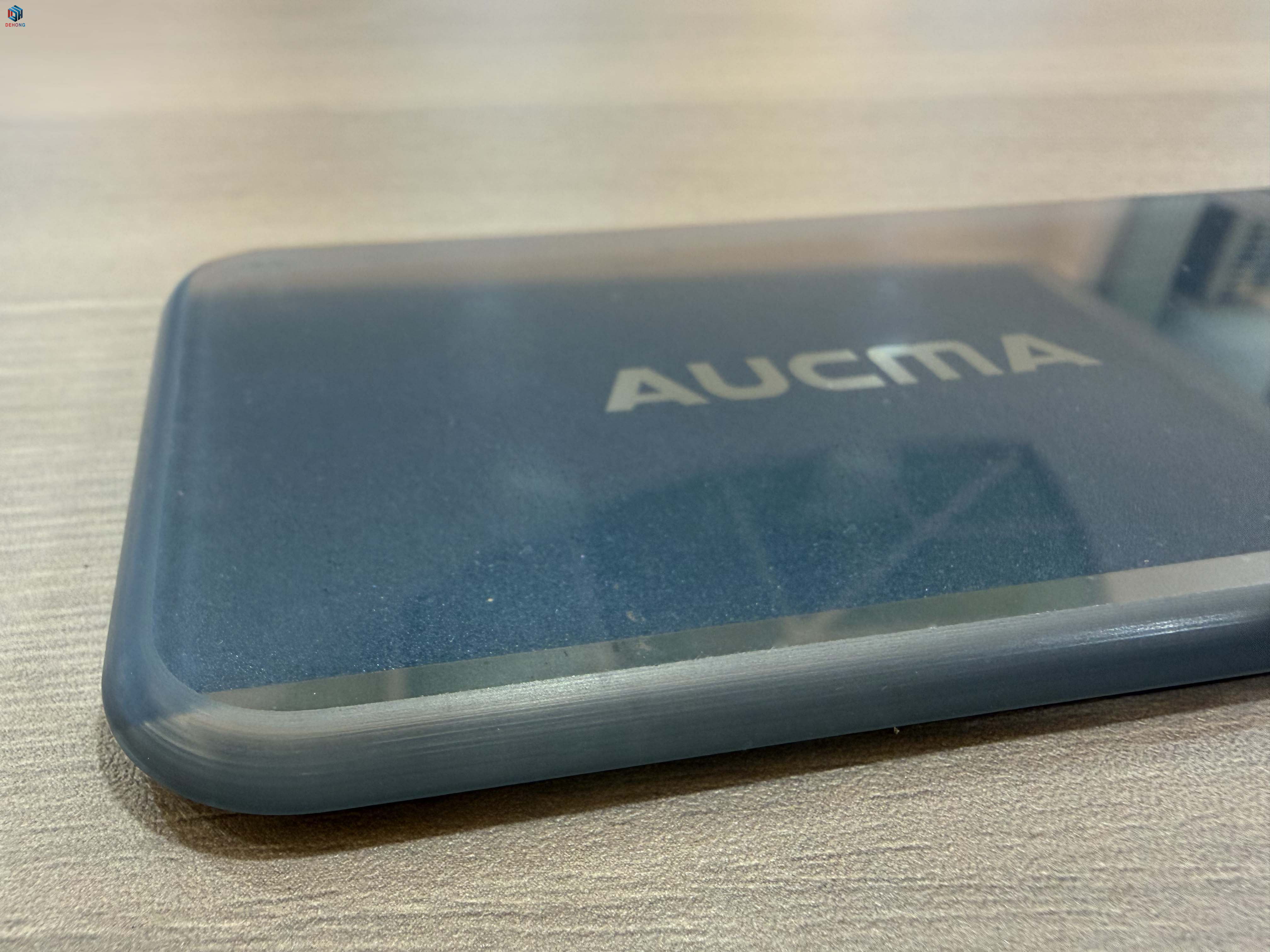
When you review manufacturer specification sheets, two dominant categories emerge. You will almost exclusively see 6mm and 8mm thickness ratings. Understanding the distinction helps you match the product to your kitchen environment.
The 6mm (1/4") tempered glass serves as the standard entry point. It represents the absolute minimum structural baseline for residential use. We consider this specification ideal for specific, controlled environments.
Best Use Case for 6mm: You should use this thickness above electric or induction cooktops. It suits smaller kitchens perfectly. It works well for standard residential venting setups generating 200 to 400 CFM.
Pros & Cons of 6mm: This material is significantly lighter. The reduced weight ensures easier installation. It remains highly cost-effective. However, it suffers a major drawback. It proves highly prone to micro-vibrations at higher fan speeds.
The 8mm (5/16") tempered glass represents the premium standard. Upgrading to this thickness fundamentally changes the physical performance of the hood.
Best Use Case for 8mm: You need this mass for gas ranges. Professional-style kitchens demand it. Wide hoods measuring 36", 42", or 48" require the extra structural support. It pairs perfectly with high-capacity venting motors pulling 600 to 1200 CFM.
Pros & Cons of 8mm: You gain superior structural integrity. It delivers excellent noise reduction. It strongly resists severe thermal stress. The main disadvantage involves the installation process. The increased weight requires robust mounting hardware and secure anchoring.
Glass Thickness Comparison Chart | ||
Specification | 6mm (1/4") Tempered Glass | 8mm (5/16") Tempered Glass |
|---|---|---|
Best Stove Pairing | Electric or Induction | Gas or Professional-Style |
Ideal CFM Range | 200 - 400 CFM | 600 - 1200 CFM |
Acoustic Performance | Moderate (May vibrate at high speeds) | Excellent (Dampens motor resonance) |
Installation Weight | Lighter, standard anchoring | Heavy, requires direct stud mounting |
You cannot select Range Hood Glass based on looks alone. You must actively evaluate your current cooking hardware. Stove type and BTU output dictate your exact requirements.
Industry guidelines provide a reliable calculation framework. Follow these steps to determine your baseline needs:
Calculate Total BTUs: Add the maximum output of all your gas burners together.
Apply the 100:1 Rule: Divide your total BTUs by 100. A 60,000 BTU stove requires a 600 CFM motor minimum.
Match Glass Mass to Airflow: If your calculation demands 600+ CFM, you must select 8mm glass. The sheer velocity of the exhaust requires this heavy mass.
You should also consider the thermal dynamics of your stove type. Glass hoods naturally complement electric and induction stoves. These appliances produce a linear, straight vertical heat rise. Gas flames behave differently. They fan outward around cookware. This lateral spread requires a deeper physical capture area. Thick glass becomes mandatory to handle the wider heat displacement.
Mounting height fundamentally alters thickness requirements. Manufacturers suggest specific vertical clearances. Standard heights sit at 20-24" for electric cooktops. They rise to 24-30" for gas cooktops.
Implementation reality often conflicts with these suggestions. Tall users frequently bump their heads on standard installations. They often raise the hood to 33-36" to prevent injury. Raising the unit creates a new problem. You lose capture efficiency. You must purchase a significantly higher CFM motor to pull smoke from that extended distance. This massive motor upgrade immediately necessitates thicker, vibration-resistant 8mm glass.
Design trade-offs play a major role in your daily cooking experience. You will typically choose between curved and flat profiles. These shapes perform differently under heavy smoke loads.
We must acknowledge inherent capture area limitations. Deep stainless steel baffles form a traditional "capture zone." They trap smoke before the fan extracts it. Glass edges lack this deep metallic cavity. Smoke can easily escape horizontally if the fan speed drops.
The flat glass advantage centers on manufacturing consistency. Flat panels allow for slightly thicker, more uniform tempering. They do not suffer from the microscopic stress points introduced during the bending process. A flat profile can act as a minor physical barrier against rising steam.
The curved glass reality offers distinct visual benefits. It provides a sleeker appearance. It creates a minimal block of view across your kitchen. However, buyers face a strict requirement. You must ensure the curve extends wide enough. It should ideally measure at least 6 inches wider than your cooktop. A 36" hood over a 30" stove compensates well for the lack of a deep metallic canopy. It captures the smoke fanning outward before it escapes the edges.
Thick glass introduces critical implementation considerations. The upgrade from 6mm to 8mm adds significant weight to the appliance. You must prepare your kitchen infrastructure accordingly.
We strongly warn against improper drywall anchoring. Standard toggle bolts cannot safely hold an 8mm glass canopy under active motor vibration. Wall-mount or island-mount installations demand structural rigidity. You must secure the brackets directly into wooden wall studs or ceiling joists. Failure to do so invites catastrophic structural failure over time.
Buyers must also prepare for the dual-cleaning challenge. Glass hoods demand ongoing, specific maintenance routines. You cannot use a single chemical cleaner for the whole unit. Users need dedicated, non-abrasive glass cleaners for the transparent canopy. Simultaneously, you must apply heavy-duty stainless steel cleaners to the chimney and baffle filters. Mixing these chemicals leads to terrible streaking and cloudy residue build-up on the glass.
Finally, insist on longevity verification. Never accept vague marketing jargon. Terms like "heavy-duty glass" or "shatter-resistant" mean nothing without data. We recommend checking the product manual for explicit UL/ETL safety certifications. Verify the exact millimeter thickness in the technical specifications before finalizing your order.
Your choice of glass thickness fundamentally shapes your kitchen's safety, noise levels, and ventilation efficiency. You should choose 6mm glass for standard electric setups where budget and light weight remain priorities. Conversely, you must insist on 8mm glass for gas ranges, high CFM requirements, and maximum durability against thermal shock.
Take immediate action before purchasing your new hood. Check the exact BTU output of your current stove first. Calculate your required CFM using the 100:1 ratio rule. Finally, filter your shortlist of glass hoods by demanding verified millimeter thickness specifications. Prioritizing these technical details ensures a quiet, safe, and beautiful cooking environment.
A: Yes, but it is rare. Tempered glass is designed to break into dull pebbles rather than sharp shards. Extreme thermal shock or pre-existing micro-fissures from improper installation are the usual culprits. Thicker glass (8mm) reduces this risk.
A: Yes. Because glass canopies lack the deep physical capture area of commercial stainless hoods, applying the "+6 inch rule" (a 36" hood for a 30" stove) is highly recommended to prevent smoke from escaping the edges.
A: Yes. While they create an airy, open feel, transparent glass immediately shows grease splatter and dust. They require high-frequency maintenance using non-abrasive glass cleaners.


