


Views: 0 Author: Site Editor Publish Time: 2026-08-14 Origin: Site


A cracked, shattered, or missing microwave door glass immediately transforms a routine kitchen appliance into a potential safety hazard. This physical damage raises urgent questions about radiation exposure and operational integrity. Appliance owners, landlords, and facility managers must accurately assess whether a compromised microwave door is a superficial cosmetic issue or a critical failure of the appliance’s radiation shielding. You need to know if the unit requires immediate decommissioning or if a repair is viable. This guide breaks down the engineering behind microwave door assemblies. We outline the strict safety thresholds for operation and provide a technical framework for deciding between OEM part replacement and purchasing a new unit.
The Mesh is the Shield, the Glass is the Structure: The internal metal mesh (Faraday cage) blocks electromagnetic waves; the microwave door glass protects this mesh from physical damage, moisture, and corrosion.
Zero Tolerance for Inner Door Damage: Any compromise to the inner glass, metal mesh, or door bonding seals mandates immediate cessation of use due to radiation leakage risks.
Outer Glass Failure Requires Action: While a shattered outer glass may not immediately leak radiation if the mesh is intact, it compromises the structural integrity of the door, exposes the mesh to hazardous environmental wear, and risks user contact with hot or energized components.
Adhesive Seals Matter: The specialized bonding agents holding the glass to the frame serve as critical secondary barriers to prevent radiation leakage.
Cost-to-Value and Part Availability Dictate the Solution: Replacing a microwave oven door glass assembly is viable for high-end or commercial units, but obsolete parts for older models or high labor costs for standard units often make a complete replacement the safer, more economical choice.
Understanding appliance safety requires looking past the transparent surface. A microwave door operates as a highly engineered multi-layer barrier designed to contain high-frequency electromagnetic waves while allowing users to monitor their food. The visible glass is just one component of a complex safety system. When we tear down a door assembly in the shop, we look at four distinct layers of protection.
The core of microwave safety relies on the perforated metal screen embedded within the door assembly. This is the Faraday cage. This component physically blocks electromagnetic radiation from escaping the cooking cavity. The engineering relies on precise physics. The magnetron generates waves at a frequency of 2.45 GHz, which translates to a wavelength of approximately 12.2 centimeters. The holes in the metal mesh are specifically sized to be significantly smaller than this wavelength, usually around 1 to 2 millimeters in diameter. Because the waves are too large to pass through these tiny perforations, they reflect back into the oven cavity to heat the food. The mesh traps the energy inside while allowing visible light, which has a much smaller wavelength, to pass through for visibility.
Modern microwaves utilize a dual-glass design. Each pane serves a distinct structural and protective role. Differentiating between the two is necessary for assessing damage in the field.
The Inner Glass: Positioned closest to the cooking cavity, this pane withstands extreme heat and seals in pressurized steam. Its primary function is to prevent food splatter, moisture, and grease from reaching and corroding the metal mesh. It is highly tempered to handle rapid thermal expansion.
The Outer Glass: The exterior pane provides essential structural rigidity to the entire door assembly. It protects the delicate internal mesh from punctures, physical impacts, and environmental wear. Furthermore, it acts as an insulating barrier against electric shocks and thermal burns.
The glass panes do not simply snap into the metal frame. Manufacturers utilize industrial polyurethane or high-temperature RTV silicone liquid gasketing to mate the Microwave Door Glass to the surrounding structure. This specialized bonding agent does more than hold the assembly together. It serves as a critical secondary seal. The adhesive fills microscopic peripheral gaps, preventing microwave radiation from escaping around the edges of the Faraday cage. Degraded adhesives compromise the entire shielding system. If you see the glass separating from the frame, the seal is broken.
The perimeter of the door utilizes engineered radiofrequency (RF) chokes. These are precisely shaped channels along the door frame designed to cancel out any escaping electromagnetic waves. The choke seal relies on exact door alignment to function correctly. If the door hinges warp or the frame bends, the geometry of the choke seal changes. This destroys the wave cancellation effect and allows radiation to leak. The choke cover, usually a plastic trim piece on the inside of the door, protects these channels from food debris.
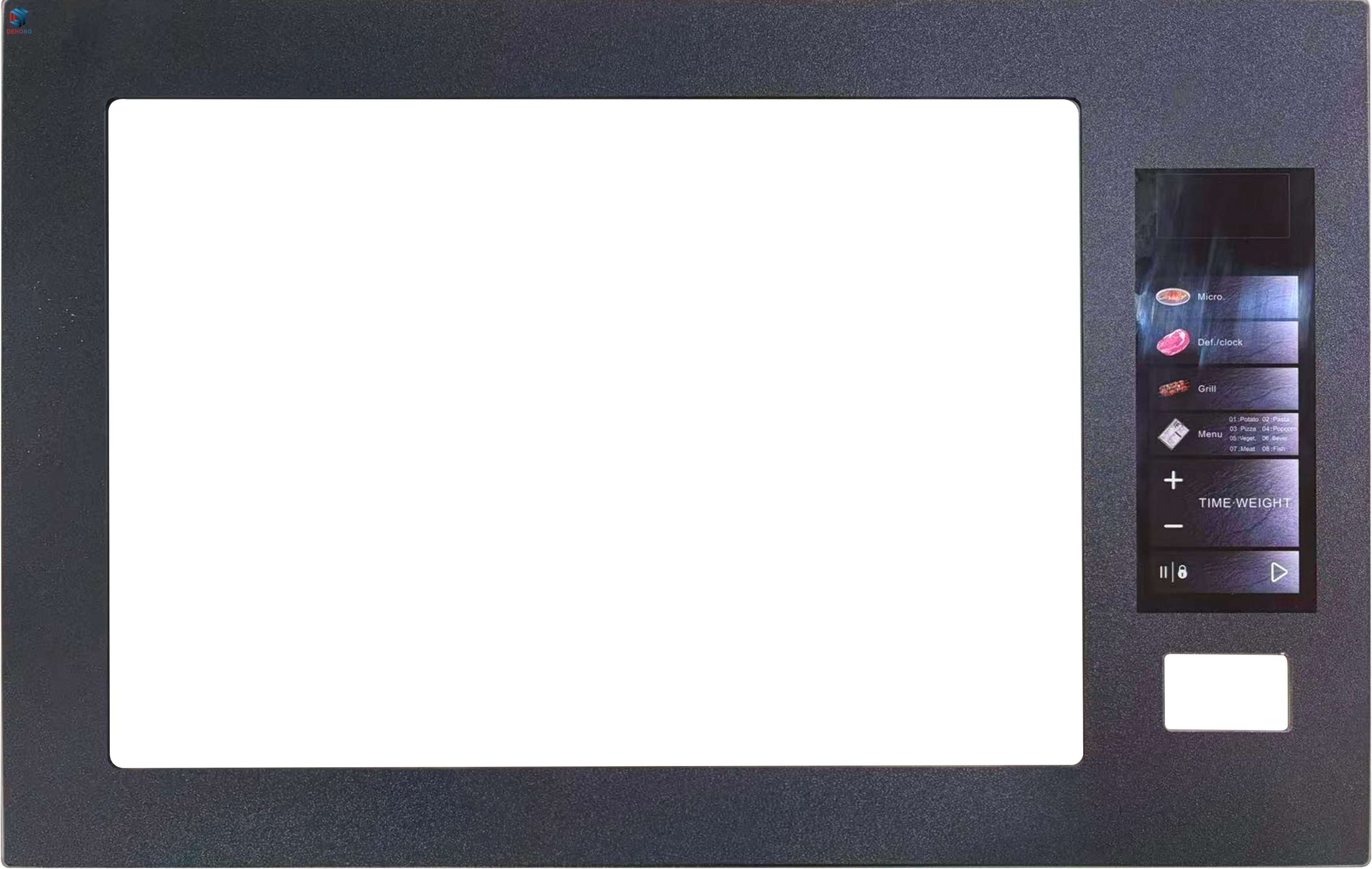
When a door assembly sustains damage, identifying the exact nature of the failure dictates the necessary response. Not all glass damage presents the same immediate risks, though all require corrective action. Field technicians use specific criteria to determine if a unit can be salvaged.
A common dilemma found in rental properties involves running a microwave with the outer glass completely removed, leaving only the metal mesh exposed. This presents severe immediate structural and safety risks. Without the outer glass, the metal mesh is highly vulnerable to accidental punctures from kitchen utensils. A single fork tine pushed through that mesh creates a direct path for RF leakage. Furthermore, the lack of thermal insulation exposes users to the high-voltage interior door frame, creating a significant risk of electrical shock and physical burns.
If the outer glass shatters but the metal mesh and inner glass remain perfectly intact, the appliance might technically still contain radiation. However, operating the unit in this condition remains dangerous. The door lacks the necessary structural barrier to prevent environmental wear. A cracked outer pane compromises the rigidity of the door. Normal opening and closing forces will eventually warp the frame and misalign the choke seals. We never recommend running a unit in this state.
Any damage to the inner glass or the metal mesh constitutes a critical failure. When the inner glass cracks, steam and grease penetrate the door cavity. This moisture leads directly to mesh rust and corrosion. Rust degrades the conductivity of the Faraday cage. A rusted mesh is a major red flag in property inspections because it virtually guarantees localized radiation leakage. The appliance must be decommissioned immediately. There is no repairing a rusted mesh; the entire door must be replaced.
Even if the glass components appear pristine, the safety system can fail due to compromised geometry. Warped hinges, degraded bonding, or a broken latch prevent the door from closing flush against the oven cavity. This misalignment renders the choke seal ineffective. It can also bypass the safety interlock switches, allowing the unit to operate while leaking high levels of RF energy. You can test this by placing a piece of paper in the door; if it pulls out easily when closed, the hinges are likely sprung.
Damage Scenario | Primary Risk | Immediate Action Required | Repair Viability |
|---|---|---|---|
Missing Outer Glass | Mesh puncture, electrical shock, thermal burns | Unplug unit immediately; do not operate. | Replace door assembly or unit. |
Cracked Outer Glass | Loss of structural integrity, eventual choke seal failure | Schedule repair; cease operation to prevent further damage. | Replace outer glass panel (if available). |
Broken Inner Glass | Moisture penetration, mesh corrosion, radiation leak | Unplug unit immediately. | Replace entire door assembly. |
Rusted Metal Mesh | Direct microwave radiation leakage | Decommission appliance permanently. | Replace entire door assembly or unit. |
Misaligned Hinges/Door | Choke seal failure, interlock bypass | Unplug unit. | Professional realignment or hinge replacement. |
Ignoring a damaged microwave door introduces significant hazards to the surrounding environment and users. Understanding the realities of these risks is essential for facility managers and homeowners alike. We see the aftermath of ignored maintenance regularly in the field.
We need to separate sensationalized myths from evidence-based realities regarding RF radiation leakage. Microwaves do not make food radioactive. They do not emit ionizing radiation like X-rays. However, escaping microwave radiation causes thermal heating of human tissue. The most significant medical risks involve localized burns and heightened vulnerability of the eyes. Because the lens of the human eye lacks adequate blood flow to dissipate heat, close-range exposure to leaking microwave radiation can lead to cataract formation. Standing directly in front of a compromised door while food cooks is a massive risk.
Some severe safety violations occur when users deliberately bypass safety interlock switches to run a microwave with a missing or fully compromised door. Microwaves have three microswitches (primary, secondary, and monitor) designed to cut power the millisecond the latch opens. Tampering with these switches presents an extreme hazard. Operating an open or unshielded microwave cavity exposes anyone nearby to instant, high-level RF radiation. It also creates a severe risk of electrical shock from the exposed high-voltage components, specifically the capacitor, which holds a lethal charge even when the unit is unplugged.
The tempered glass in a microwave door acts as a thermal mass. It absorbs and dissipates heat generated during the cooking cycle. Operating the appliance without this glass risks thermal hazards. The remaining plastic and metal door components can warp, melt, or structurally collapse under standard operating temperatures without the glass to regulate the heat. We have seen plastic door frames literally melt onto the oven cavity because the outer glass was missing.
For landlords and facility managers, damaged appliances carry administrative and financial risks. Rusted door meshes or shattered glass are flagged as automatic hazards during professional home inspections, HUD REAC inspections, and commercial safety audits. These compliance failures can impact property valuations, violate lease agreements, and expose property owners to liability. A broken microwave door is an immediate fail on most standardized safety checklists.
When faced with a broken door, deciding between repair and replacement requires analyzing part availability, safety compliance, and overall value. You cannot just glue a new piece of glass on and call it a day.
A frequent challenge arises when an older microwave's outer glass shatters, but the manufacturer has discontinued the replacement part. In these situations, attempting to use custom glass-cutting services is neither viable nor safe. Custom-cut standard glass lacks the specific tempering, thermal shock resistance, and exact dimensional tolerances required to maintain a safe electromagnetic seal. If you cannot find the exact part number for your model, the unit is dead.
If repair is pursued, sourcing exact Original Equipment Manufacturer (OEM) parts is an absolute necessity. Cheap aftermarket glass assemblies often lack proper tempering or the precise engineering required to fit the choke seals perfectly. Using non-OEM parts risks invisible radiation leakage due to poor fitment and inadequate adhesive sealing. Always verify the part number against the manufacturer's schematic.
Evaluate the cost-to-value ratio before committing to a repair. Calculate the total cost of the OEM replacement door assembly plus the hourly rate for professional labor. Compare this total against the depreciated value of the current unit and the price of a brand-new, warranty-backed appliance. Often, standard countertop models cost less to replace entirely than to repair professionally. Built-in or over-the-range units are usually the only ones worth repairing due to the high cost of replacement and installation.
While DIY repairs might seem appealing, replacing Microwave Oven Door Glass involves significant safety trade-offs. Proper installation requires specialized tools to ensure the door is perfectly balanced and aligned. You have to carefully pry off the inner choke cover without snapping the plastic tabs, remove the old adhesive, apply high-temp RTV silicone, and set the new glass perfectly square. Most importantly, a professional technician will test the repaired unit with a calibrated microwave leakage meter (like a Narda meter) to verify that the RF shielding is fully restored. This step is impossible for the average DIYer.
Unplug the Unit: Never work on a microwave while it is connected to power.
Discharge the Capacitor: Even unplugged, the high-voltage capacitor holds a lethal charge. Professionals know how to safely discharge this before opening the cabinet.
Remove the Door: Usually involves lifting the door off the hinge pins after removing a retaining clip.
Separate the Door Panels: Carefully pry the inner choke cover away from the outer frame using a plastic putty knife.
Replace and Seal: Install the new OEM glass, ensuring the adhesive creates a continuous, unbroken seal around the perimeter.
Reassemble and Test: Rehang the door, check the latch alignment, and perform an RF leakage test.
Microwave manufacturing and safety are governed by strict regulatory standards designed to protect consumers from radiation exposure. These are not suggestions; they are federal laws.
In the United States, the FDA enforces a Federal Performance Standard (21 CFR 1030.10) for microwave ovens. This regulation mandates that microwave radiation leakage must not exceed 5 milliwatts per square centimeter at approximately 2 inches from the oven surface throughout the entire lifetime of the appliance. A compromised door glass or warped frame easily causes a unit to exceed these strict legal limits. Manufacturers design the doors to emit far less than this limit when new, usually around 1 milliwatt or less.
Appliance manufacturing requires specific material standards. Microwave doors must utilize tempered, thermal-shock-resistant safety glass. Standard window glass cannot withstand the rapid temperature fluctuations and will shatter. Acrylic or plexiglass substitutes are highly dangerous. They will melt under standard operating temperatures, release toxic fumes, and fail entirely as a structural barrier. Never attempt to substitute appliance-grade glass with hardware store materials.
Operating a microwave with missing, shattered, or compromised door glass is an unacceptable safety risk. The glass, the adhesive bonding, and the internal mesh work as an interdependent safety system. When one component fails, the entire shielding mechanism is compromised. You cannot bypass these safety features without putting yourself and your property at risk.
If the unit is a high-value built-in, over-the-range, or commercial model, source an OEM door assembly and hire a certified technician. For standard countertop models, or if the OEM part is discontinued, the safest and most cost-effective route is full unit replacement.
Unplug the damaged unit immediately to prevent accidental use by others.
Do not attempt to run a test cycle or heat food to see if it still works.
Locate the appliance model number on the interior sticker or rear panel.
Cross-reference the model number with OEM parts distributors to check door assembly availability.
Hire a certified appliance technician for the repair, or purchase a new unit if parts are obsolete.
A: No. While the mesh blocks radiation, the missing outer glass exposes the mesh to physical damage and removes essential thermal insulation. This creates severe risks of electrical shock, thermal burns, and structural failure of the door assembly. Do not operate the unit.
A: The metal mesh acts as a Faraday cage. The holes are specifically engineered to be smaller than microwave wavelengths, effectively blocking electromagnetic radiation from escaping the oven while still allowing visible light to pass through so you can see the food.
A: DIY replacement is highly discouraged. Improper installation can lead to hinge misalignment, failed choke seals, and inadequate adhesive bonding. Professional repair is required to ensure proper alignment and to perform mandatory post-repair radiation leakage testing with calibrated meters.
A: Rust and corrosion degrade the metal's electrical conductivity, compromising the Faraday cage's ability to block radiation. A rusted mesh can allow harmful microwave radiation to leak into the surrounding environment and will result in an automatic failure during property safety inspections.
A: Absolutely not. Microwave doors require specialized tempered safety glass designed to withstand extreme thermal shock. Standard glass will shatter under the heat, and plastic substitutes like acrylic or plexiglass will melt, creating severe fire and chemical hazards.
A: You must permanently decommission and replace the microwave. Custom glass fabrication cannot replicate the precise dimensional tolerances, tempering, and adhesive bonding required for safe RF shielding. Operating without an exact OEM match is unsafe.
A: Costs vary widely based on the model. You must factor in the price of the OEM door assembly plus the hourly rate for a certified technician. For many standard countertop models, this combined cost exceeds the depreciated value of the appliance, making a new unit the better choice.


