


Views: 0 Author: Site Editor Publish Time: 2026-08-13 Origin: Site


The architectural appeal of transparent and floating kitchen ventilation designs often masks the complex fluid dynamics and thermal realities of cooktop exhaust. Specifying the wrong material, thickness, or shape for a range hood panel compromises smoke capture, increases maintenance burdens, and introduces severe thermal shock and structural shattering risks. High-output burners generate intense heat plumes and vaporized grease that demand robust containment and extraction strategies.
A technical evaluation of Range Hood Glass—focusing on material tempering, structural shape, low-iron optical clarity, and required CFM (Cubic Feet per Minute) compensation—is necessary to balance contemporary aesthetics with rigorous ventilation standards. Properly engineered glass components ensure long-term durability while maintaining the sleek profile desired in modern residential and commercial kitchen spaces.
Material Mandate: Tempered safety glass is the only viable option for range hoods due to its high thermal shock resistance and safe failure mode; standard annealed glass poses a critical hazard.
Aesthetic Distinction: Standard tempered glass exhibits a pronounced green tint on exposed edges; high-end custom designs require low-iron (ultra-clear) glass to preserve color neutrality against cabinetry.
The Containment Trade-off: Glass canopy hoods inherently lack the physical capture volume of traditional deep stainless steel hoods, requiring precise CFM overcompensation and wider dimensions to prevent smoke bypass.
Shape Dictates Function: Flat glass panels generally offer more predictable airflow directionality and easier custom integration than arched or curved glass wings.
Height & Placement Sensitivity: Mounting height directly impacts both thermal stress on the glass and the hood’s extraction efficiency; strict adherence to fuel-type clearances is mandatory.
Maintenance Reality: Transparent range hood panel glass provides zero concealment for vaporized grease, requiring a strict, high-frequency maintenance protocol to prevent permanent chemical etching.
The primary function of any ventilation enclosure is to capture and direct heat, moisture, and particulate matter into the extraction system. The glass must withstand continuous exposure to high-BTU heat plumes, rapid temperature fluctuations, and potential physical impacts without structural failure. Selecting the correct glass specification is the foundation of a safe and effective ventilation setup. We see many field failures where improper glass selection leads to cracking under normal cooking conditions.
The tempering process involves heating standard glass to over 600 degrees Celsius and then rapidly cooling it. This controlled thermal treatment induces compressive stresses on the surface and tensile stresses in the core. It increases the material's tensile strength by four to five times compared to standard annealed glass. This enhanced strength is non-negotiable for kitchen environments where heat is a constant factor.
Using untreated or annealed glass near high-output gas ranges risks catastrophic thermal shock. When cold water or ambient air suddenly hits a glass surface heated by boiling water vapor or a searing pan, annealed glass cannot handle the rapid localized contraction. It shatters into large, dangerous shards. Tempered glass resists these rapid temperature shifts. If broken, it safely fractures into small, blunt dice-like pieces. Verify that the glass complies with recognized safety standards such as ANSI Z97.1 or 16 CFR 1201 to ensure proper impact resistance and a safe failure pattern.
Optical clarity plays a significant role in high-end kitchen design. Standard glass contains a natural iron content that creates a distinct green edge tint. This green hue becomes highly visible on floating glass canopies or thick exposed edges. It often clashes with white cabinetry or neutral color palettes, ruining the intended design aesthetic.
Low-iron glass is manufactured by reducing the iron content in the silica mix. It provides ultra-clear transparency. This specification maintains true color neutrality, allowing the true colors of surrounding custom cabinetry, tile backsplashes, and lighting to show through without distortion. For custom designs where the glass edge is a prominent visual feature, low-iron glass is the superior specification. It prevents the glass from looking like a cheap afterthought.
Structural rigidity must be balanced against the weight strain placed on wall-mount or island-mount brackets. Standard thickness requirements for range hood applications typically fall between 6mm and 8mm. This thickness provides sufficient mass to resist vibration from the blower motor while maintaining structural integrity across wide spans.
Thicker glass directly impacts custom millwork routing and the specification of mounting hardware. Heavy-duty mounting standoffs and reinforced structural blocking within the wall or ceiling are required to support the increased weight. Engineers must calculate the total sheer load on the mounting points. This is especially true for island hoods suspended entirely from the ceiling joists.
Verify the ceiling joist load capacity before specifying 8mm glass for island hoods.
Use heavy-duty toggle bolts or direct-to-stud lag screws for wall-mounted brackets.
Ensure the glass channel routing in custom millwork accounts for a 1mm expansion gap.
The physical geometry of the hood must effectively corral rising effluent before the blower extracts it. This physical corralling mitigates the bypass issues that are notoriously common to flat or shallow glass designs. We must look at how the shape interacts with the rising thermal plume.
A frequent industry critique is that glass hoods function poorly compared to deep, basin-style stainless steel canopies. Traditional commercial-style hoods feature a deep physical basin that acts as a reservoir. When a sudden burst of smoke rises from the cooktop, this basin captures and holds the expanding plume until the blower can evacuate it.
Glass designs prioritize a slim and unobtrusive profile. They inherently lack this reserve containment volume. Fluid dynamics dictate that a thermal plume expands as it rises. When this expanding plume hits a flat or slightly curved glass surface without deep sides, the smoke and grease can easily roll off the edges. It bypasses the suction zone entirely and disperses into the room.
The shape of the Range Hood Panel Glass dictates both its aerodynamic performance and its integration into the surrounding architecture. You have to choose the right shape for the specific cooking application.
Flat Panels: These provide a rigid, predictable barrier. They are significantly easier to clean, less prone to refracting integrated LED lighting awkwardly, and much easier to integrate into custom wood or MDF surrounds. Flat panels create a straightforward horizontal boundary that forces air toward the central extraction filters.
Arched/Curved Wings: These offer a lighter, aerodynamic aesthetic. However, curved wings can inadvertently deflect rising smoke outward if the curve's geometry does not align perfectly with the burner layout and the rising thermal plume.
Design Feature | Flat Glass Panels | Arched/Curved Glass Wings |
|---|---|---|
Capture Efficiency | Predictable horizontal barrier; forces air to center. | Can deflect smoke outward if curve is too steep. |
Cleaning & Maintenance | Simple, straight wiping motion; easy to squeegee. | Requires contouring to the curve; grease pools at low points. |
Custom Integration | Easily routed into straight wood/MDF channels. | Requires complex CNC routing for custom surrounds. |
To counteract the lack of a deep capture area, the glass panel must extend further beyond the cooktop footprint. Sizing the glass panel at least 6 inches wider than the cooking surface provides a necessary buffer zone to catch the expanding thermal plume. For a 30-inch range, you need a 36-inch wide glass canopy.
Mounting height limits are equally critical. The glass canopy must be mounted between 24 to 30 inches over electric cooktops, and 30 to 36 inches over gas ranges. Mounting the hood too high allows the smoke plume to expand beyond the width of the glass. Mounting it too low exposes the tempered glass and surrounding components to excessive, concentrated heat from the burners.
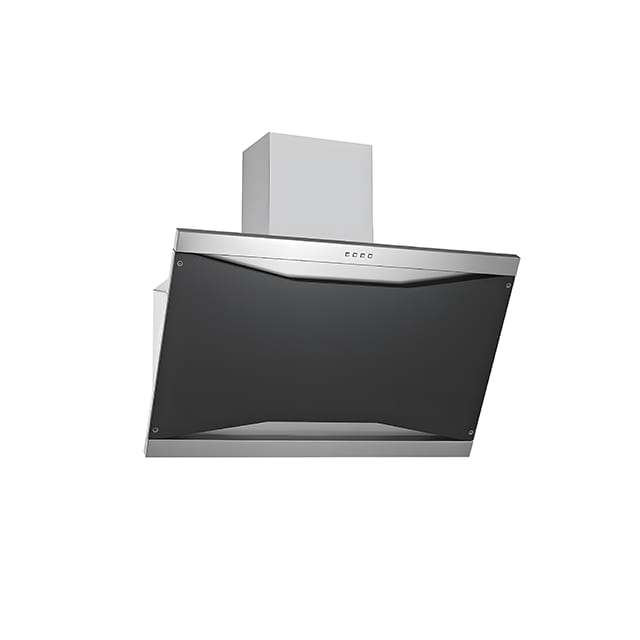
Because glass hoods rely more on suction velocity than physical containment, blower power must be calibrated accurately to prevent spillover. The mechanical extraction rate must compensate for the lack of a physical capture basin. You cannot just use standard CFM calculations here.
Mapping BTU output to CFM requirements requires adjustment when dealing with shallow glass canopies. A standard rule of thumb is 100 CFM for every 10,000 BTUs of gas cooktop output. A glass canopy generally requires a 20-30% higher CFM rating than a deep-basin stainless hood to achieve the same effective clearance of heavy smoke. This overcompensation ensures that the air velocity at the edges of the glass is strong enough to pull expanding smoke inward before it escapes into the room.
The smooth surface of the glass underside affects boundary layer airflow. While glass provides minimal friction, the transition from the flat glass surface into the extraction filters and transition ducting creates static pressure. The blower must be rated to overcome this static pressure. This is critical if the duct run to the exterior is long or contains multiple elbows. Centrifugal blowers are generally preferred over axial fans for these applications due to their ability to maintain airflow against high static pressure.
High-CFM blowers are frequently required to compensate for the inefficient capture zones of flat glass designs. Extracting this volume of air depressurizes the kitchen. Local building codes strictly regulate this, requiring Make-Up Air (MUA) systems to automatically introduce fresh air from outside. Failure to implement an MUA system can result in the dangerous backdrafting of carbon monoxide from other combustion appliances back into the living space.
Designing a custom enclosure using wood, MDF, or metal that securely holds glass panels requires careful attention to fire safety clearances and physical structural integrity. The integration must handle heat, moisture, and mechanical vibration simultaneously. Field modifications are often required to get this right.
When constructing the surround for a custom glass hood, material selection impacts longevity. MDF offers a highly stable, uniform surface ideal for painted finishes. It is highly susceptible to swelling if exposed to the heavy steam environments typical of range hoods. Birch Plywood provides superior screw-holding power and much better resistance to moisture warping. It is the preferred structural substrate for custom hoods, even if it is later clad in a different finish material.
Building codes dictate required combustible material clearances from the cooktop surface. They typically mandate a 30-36 inch minimum vertical clearance. Wood framing cannot be exposed directly to the heat plume. You must integrate a stainless steel metal liner or insert. This liner isolates the combustible wood framing from both direct heat and vaporized grease contact. It also provides a secure, non-combustible mounting point for the blower motor and the glass panels.
Rigidly mounting glass directly to a vibrating blower housing or a custom wood frame introduces severe implementation risks. The high-speed rotation of the blower motor transfers kinetic energy through the chassis. This vibration can cause micro-fractures in the glass at the mounting points, loosen mechanical connections, or create loud rattling noises.
To mitigate this, specify the use of rubberized gaskets, silicone-lined U-channels, and isolated blower mounting hardware. Decoupling the glass from the motor vibrations ensures the structural integrity of the panel and maintains a quiet acoustic profile during operation. We always use neoprene washers on any through-glass fittings.
Maintaining the visual clarity that justifies the purchase of a transparent hood is an ongoing operational requirement. Without regular maintenance, the material degrades visually and functionally over time. You have to clean it constantly to keep it looking acceptable.
The primary aesthetic trade-off of a transparent canopy is that vaporized grease provides zero concealment. When heated grease contacts the cooler glass surface, it condenses. Over time, and with repeated exposure to heat, this grease polymerizes. It creates a sticky, highly visible yellow film on the underside of the glass. This polymerized grease is far more conspicuous on clear glass than it is on brushed stainless steel, demanding a much higher frequency of cleaning.
Using abrasive scrubbing pads or harsh ammonia-based cleaners can cause micro-scratches on the glass surface. They also degrade the structural adhesives and silicone gaskets holding the glass to the metal chassis. Recommend specific non-abrasive, enzyme-based degreasers and strict microfiber wipe-down protocols. Cleaning the glass after every heavy cooking session prevents the grease from polymerizing. This maintains the integrity and clarity of the glass without stripping any applied protective coatings.
Spray an enzyme-based degreaser directly onto a microfiber cloth, not the glass.
Wipe the underside of the glass canopy in straight, overlapping lines.
Use a dry microfiber cloth to buff out any remaining streaks immediately.
Inspect the silicone edge gaskets monthly for signs of chemical degradation.
Integrating glass into kitchen ventilation systems requires a precise balance of aesthetic desires and mechanical realities. Proper material specification and structural design prevent safety hazards and ensure efficient smoke extraction. You must follow the engineering requirements to avoid field failures.
Specify 8mm tempered safety glass with a low-iron composition for all custom canopy builds.
Size the glass panel to extend at least 3 inches past the cooktop on both the left and right sides.
Calculate your required CFM and add a 25% buffer to compensate for the lack of a physical capture basin.
Install a mechanical Make-Up Air damper if your selected blower exceeds 400 CFM.
A: Standard window glass is annealed and cannot withstand the rapid temperature fluctuations generated by cooktops. It will suffer thermal shock and shatter into large, dangerous shards. Only tempered safety glass, which is heat-treated for high tensile strength and safe fracture patterns, is suitable for range hood applications.
A: Yes. Glass hoods lack a deep physical basin to capture and hold expanding smoke plumes. To prevent smoke from rolling off the flat edges and bypassing the hood, a higher CFM blower is required to create a stronger suction velocity at the perimeter.
A: Rattling is caused by motor vibrations transferring into the rigid glass panel. This is resolved by decoupling the materials. Ensure the glass is mounted using silicone-lined channels, rubberized gaskets, or nylon standoffs that absorb the kinetic energy from the blower chassis.
A: Standard tempered glass contains iron impurities that give the edges a distinct green tint, which can clash with white or light-colored cabinetry. Low-iron glass undergoes a specialized manufacturing process to remove these impurities, resulting in an ultra-clear, color-neutral appearance.
A: Because glass offers no concealment for condensed vapors, it should be wiped down with a microfiber cloth and a mild, non-abrasive degreaser after every heavy cooking session. Allowing grease to sit and reheat causes it to polymerize into a sticky, difficult-to-remove yellow film.


